

Two debates in two evenings. Five leaders. Dozens of slogans, attacks and figures thrown around at breakneck speed.
And finally, something begins to become clear.
This campaign is not simply about choosing between change and continuity. Almost all parties are proposing, to varying degrees, to change something important.
The real question is rather: What change?
Paul St-Pierre Plamondon proposes a break with the Canadian framework and the creation of an independent Quebec.
Éric Duhaime proposes a different kind of break: questioning part of the economic and institutional model that we have built since the Quiet Revolution and that we have long treated as a sacred cow.
Ruba Ghazal is also an independence advocate, but wants to take advantage of this break to significantly strengthen public services, redistribution and state intervention.
Charles Milliard primarily wants to modernize the existing machine.
Finally, Christine Fréchette must convince Quebecers that CAQ continuity can produce different results than those of the last eight years.
This is what the second debate, broadcast for 90 minutes on Noovo and Crave, helped to clarify. Its format of short duels was sometimes dizzying, but it had one quality: when a politician only has a few seconds to respond, they quickly return to their core ideas.
Duhaime learned his lesson
My first impression on Wednesday evening was that Éric Duhaime had not repeated several of the mistakes of the previous day.
During the debate, some of his statements had occasionally managed to overshadow the arguments he was trying to make. On Wednesday, he was more disciplined and focused more on his themes: bureaucracy, government size, taxation, competition, and efficiency. Even the VAT analysis highlighted his ability to bring up bureaucracy and government size in discussions.
The exchange with PSPP on health illustrates this well.
PSPP told him that "one doctor in private practice doesn't create another doctor." Duhaime replied that private practice could be more efficient.
The two were not answering exactly the same question.
PSPP was talking about number of doctors.
Duhaime was talking about the the amount of care that can be provided with the available doctors.
If a doctor can treat more patients in one organization than in another, the number of doctors has not changed, but the actual capacity of the system has.
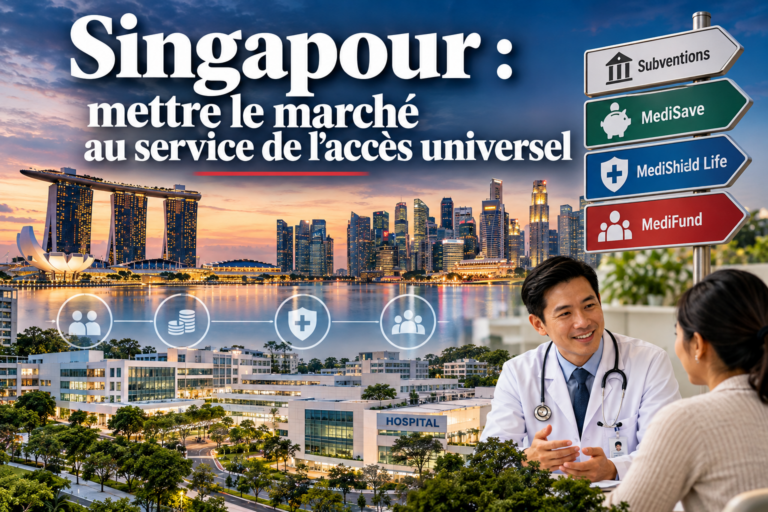
This obviously doesn't prove that the private sector will necessarily be more efficient. That can be measured. But that's precisely the debate we should be having, rather than automatically pitting "public" against "private" as if there were no difference between our model and that of the United States.
But the most important change in Duhaime's approach is not in the form. It is in the scope of what he proposes.
The PCQ now explicitly describes the the Quebec model as being "out of breath" and asserts that it must be rebuilt by tackling in particular waste, subsidies, regulation, centralization and tax pressure.
Duhaime is therefore not simply proposing to better manage the existing model.
He proposes to change some of its foundations.
His autonomist project also remains explicitly Canadian. The PCQ program speaks of a Quebec that is "autonomous, strong, within the Canadian Confederation," and Duhaime himself presents his project as a search for increased autonomy for Quebec within the federation.
This is what profoundly distinguishes his project from that of the PQ.
PSPP is proposing that Quebecers move to another country.
Duhaime proposes that they take up the challenge of building a more prosperous Quebec. within the Canadaby changing part of the model according to which Quebec operates.
One can dispute his diagnosis or the proposed solutions.
But this is not a minor accounting adjustment.
One wants to change the national framework. The other wants to change the model.
That's no small thing.
Fréchette: to look away from the rearview mirror
Christine Fréchette chose a rather different strategy.
The word of the evening was: referendum.
From the very first minutes, she sought to link the PSPP's sovereignist project to uncertainty. She returned to this theme even when she debated with Charles Milliard about public finances, to the point where the repetitive nature of the strategy was noted in several accounts of the debate.
The logic is easy to understand.
His opponents want to ask the question:
What is your assessment of eight years of CAQ government?
Fréchette would prefer to ask this one:
In an unstable world, do you really want to add a referendum to Trump, tariffs, and economic uncertainty?
This framing doesn't come out of nowhere. The CAQ's financial framework begins precisely by invoking "economic uncertainty," the tariff war, and an "unstable and unpredictable" geopolitical context.
This is a coherent strategy: to shift the electoral question from past performance to future risks.
The problem is that a report doesn't simply disappear because the word "referendum" is mentioned often enough.
SAAQclic still exists. So does Northvolt. The IT failures in healthcare, homelessness, and the state of public services continued to be used by Fréchette's opponents to steer the discussion back to the CAQ's years in power. The debate transcripts clearly demonstrate this return of the CAQ record to the discussions.
After eight years in power, the CAQ can no longer campaign as if it were coming from the outside to fix the system.
Fréchette is therefore seeking to move the election of rearview mirror facing the windshield.
That's politically understandable.
But voters still know how to turn their heads.
PSPP: This time, the target was clearly identified.
In the second debate, PSPP found themselves under much more direct attack on the referendum issue.
Fréchette focused a significant portion of his offensive on this issue. Charles Milliard also seized upon it, even going so far as to link the prospect of a referendum to youth anxiety. PSPP generally responded by turning the argument of stability against the outgoing government.
His argument essentially boils down to this:
Do you want to talk about the uncertainty of what I might do tomorrow? Let's also talk about the results of what you did yesterday.
But we must not underestimate the scope of the PQ project either.
The PQ is not simply proposing a change of government. Its Blue Book explicitly describes the envisaged sequence: election of a PQ government, then victory of the Yes side in a referendum and creation of an independent Quebec.
This is a major break.
But it is situated on a different axis from the one proposed by Duhaime.
PSPP believes that the Canadian framework prevents Quebec from having all the levers necessary for its development.
Duhaime believes that part of Quebec's economic and institutional model itself is detrimental to its prosperity.
These are two different critiques of the status quo.
And probably two of the most important groundbreaking projects of the campaign.
Ghazal: Reinforcing the model rather than questioning it
Ruba Ghazal represents almost the ideological mirror of Duhaime on the role of the State.
Québec solidaire does not primarily diagnose a Quebec state that is too large.
He sees instead underfunded public services, excessive inequalities, and wealth that should be mobilized more collectively.
The party proposes, among other things, to tax fortunes exceeding million and believes it can thus raise funds. billion per year to fund, in particular, schools, social housing and other public services. QS itself presents the measure as a way to "fix our public services".
The logic is almost exactly the opposite of that of the PCQ.
Duhaime looks at a state that taxes enormously, spends enormously and, in his opinion, produces too little, and concludes that the model needs to be questioned.
Ghazal looks at services that are not working well and concludes that they need to be given more resources.
That's probably the deepest economic divide in this campaign.
And an important nuance must be added: Québec solidaire is also pro-independence.
But its independence project is not that of the PQ. QS proposes to launch a constituent assembly and explicitly links the creation of a country to a much broader social, ecological and redistributive transformation.
In other words, Ghazal does not just want to reinforce the current Quebec model.
She also wants to use independence to build a much more interventionist version of it.
This leads to a question I would like to hear clearly asked:
At what size would the Quebec state be considered large enough?
And, to be consistent, we must turn the question back to Duhaime:
How far should it be reduced?
At least we would know where each of us wants to take us, rather than endlessly discussing the direction of the next step.
Billion: Repairing the Machine
Charles Milliard better defined his territory on Wednesday.
He seems to want to occupy the position of manager and modernization.
The Quebec Liberal Party (PLQ) itself acknowledges that the public sector has become more cumbersome and proposes greater autonomy for employees, less duplication of effort, and fewer administrative processes. The party estimates that its reform could produce approximately .7 billion in recurring savings eventually.
So it's not exactly the status quo.
But it is not a questioning of the model like the one proposed by Duhaime.
Billion wants above all repair and modernize the existing machine.
His position on the third link sums up this caution quite well.
He no longer wants to commission new studies, contrary to what he initially suggested. Instead, he wishes to review all the work already completed before making a firm commitment.
Taken in isolation, it's perfectly defensible.
But after decades of studies on the links between Quebec City and Lévis, and almost ten years of dithering in the current political cycle, this caution inevitably exposes him to a question:
At what point do we consider that we know enough to make a decision?
Politics sometimes requires more than just reading the file.
At some point, you have to close your schoolbag.
The real debate: what do we do with the Quebec model?
After two debates, I believe that this is where one of the major questions of this election lies.
Not simply sovereignty versus federalism.
Not simply left versus right.
Not even change versus continuity.
The question becomes:
What do we do with the Quebec model?
Fréchette essentially wants to pursue him by correcting his mistakes.
Milliard wants to modernize it and manage it better.
Duhaime wants to question several of its foundations in order to build a Quebec that is less taxed, less regulated, more decentralized and more open to market mechanisms.
PSPP wants to retain a good part of Quebec's economic and social institutions, but place them in a sovereign state with all its levers.
Ghazal also wants independence, but to build a more redistributive, more interventionist state, more focused on public services.
These are five directions that are much more different than the slogans suggest.
More government, less government, or a different kind of government altogether?
This question comes up in virtually all major cases.
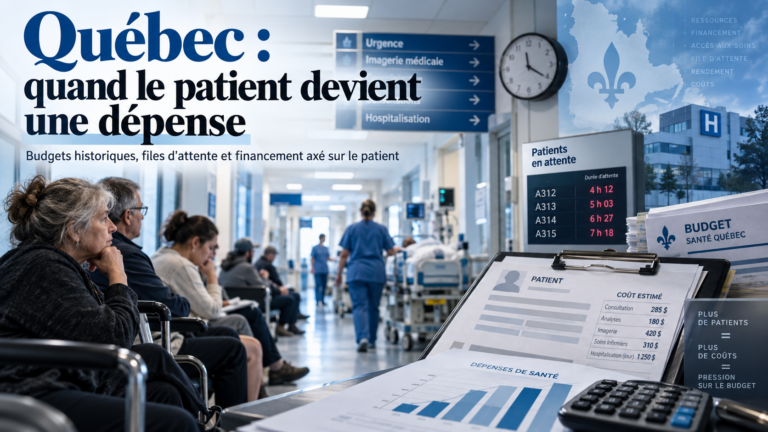
In healthcare, should we primarily strengthen the existing public network or open up services more to other providers?
In education, is the main problem a lack of money, or a lack of autonomy, organization, and accountability?
In the housing sector, should we intervene more on prices and construction, or eliminate more of the obstacles that prevent supply from increasing?
In terms of public finances, does the Quebec government lack revenue or does it primarily suffer from a problem of spending, structures and performance?
These questions may seem technical.
They are in fact deeply philosophical.
They concern what is expected of the state, what is expected of individuals, what is believed that the market can accomplish, and what is thought that the government should do in its place.
And they explain why Ghazal and Duhaime are so far apart on the economic axis.
They are not just arguing about the amount of a budget.
They can't even agree on the nature of the problem to be solved.
After two debates, the choices become clearer.
The first debate mainly revealed the vulnerabilities of the leaders.
The second one gave a better idea of the direction they want to take Quebec.
Duhaime tightened his message and presented more clearly a substantial questioning of the Quebec model, combined with increased autonomy within Canada.
PSPP had to defend another break more directly: that of independence.
Ghazal confirmed a project that was also pro-independence, but associated with a marked strengthening of public services, redistribution and state intervention.
Milliard further defined a project for modernization and better management of the state.
Fréchette, finally, is banking on stability in a world she describes as uncertain and is asking Quebecers to believe that a new CAQ leadership can correct the mistakes of the last eight years.
There is still a debate to be had.
But after two evenings, the campaign finally begins to transcend the personalities.
We're starting to discuss something much more fundamental:
What kind of Quebec do we want to build, and with what model?
About the Author

I like your observations.
I'll leave you with my observations, which I believe would be beneficial. At the very least, they would make our public services (at all levels) a little more efficient.
1) The use of information technology was supposed to transform our organizations. We certainly saw some gains (databases, email, Word, Excel, AutoCAD, digital tax returns, etc.). Today, there are too many IT missteps, because for some firms, the billions in fees they rake in are very lucrative. And the clients don't have the skills and knowledge required to manage these large contracts and these digital tools, which are mostly poorly programmed, cumbersome, and extremely expensive. As we experience daily, the famous dashboards for monitoring (like those used by Christian Dubé) are biased. Managers have no incentive to display yellow and red indicators. Therefore, the decisions made are flawed if they are based on bad data. Power BI has become a cancer.
2) Among the large number of civil servants, several should be assigned to ministries or agencies (CHSLD, CLSC, SQ…), in order to provide a striking force to increase the supply of public services directly on the ground.
3) I have absolutely nothing against universities and graduates. We desperately need knowledge. But we have too many white-collar workers in the public sector. For example: an architect who awards architectural contracts to architectural firms. Another example: thousands of people in IT, even though things are getting worse and worse (SAAQclic, Phénix, etc.).
4) There are certainly unnecessary expenses. So, those who are proposing cuts, I'm sure we can manage much more tightly.
This is what makes the PCQ's offer interesting. The government appropriates far too much of the wealth produced in Quebec. The cuts they propose (approximately 5% of spending per year) only affect the bureaucracy and not frontline workers, and are entirely credible. 5% per year is far from the dismantling of the system that Christine Fréchette claims.
Could we perhaps bring back to the forefront the famous quote from the Honorable John F. Kennedy: "We should not ask what the state can do for us, but what we can do for the state"?
In healthcare, Sweden is often suggested as a model; I recommend an article from the Fraser Institute received on September 19, 2026:
https://www.fraserinstitute.org/studies/beyond-public-private-divide-what-sweden-can-teach-Canada-about-health-care-reform?utm_source=Fraser-Institute-Enews&utm_campaign=Beyond-Public-Private-Divide-What-Sweden-Can-Teach-Canada&utm_medium=Fraser_Update&utm_content=Learn_More&utm_term=700
Sweden and Canada spend similar amounts on universal healthcare, but Sweden consistently outperforms Canada – Why? They have twice as many doctors as we do.